The idea of the Law God sits at the crossroads of myth, power, and jurisprudence. It is a figure, a symbol, and an argument all at once: a personification of order, a mirror for human institutions, and a prompt for ethical reflection. In many traditions, the law is not merely a set of rules but a cosmic force that binds communities to a shared sense of truth, equity, and responsibility. This article offers a comprehensive guide to the Law God as an archetype found in myth, its diverse manifestations across cultures, and the legal and philosophical implications that arise when people imagine law as something divine, authoritative, and transformative.
Across civilizations, the concept of a supreme or semi-divine source of law appears in multiple guises. These figures are not always called by the exact phrase “Law God,” but their functions are unmistakably juridic: they decree, adjudicate, and safeguard the moral order. In different mythologies, the Law God tends to embody three core ideas: divine truth, cosmic order, and moral accountability.
Origins and early visualizations
In ancient Mesopotamia and Egypt, law was deeply intertwined with cosmic order. In Mesopotamian culture, the ideal of law arose from the authority of kings who enacted codes under the watch of gods who oversee justice. In Egyptian belief, Ma’at personified truth, balance, and universal order, and her judgment determined the fate of souls in the afterlife. These early personifications served as a living reminder that law is both social convention and cosmic duty.
In classical Greece, the personification of law took on more social and institutional dimensions. Themis, the goddess of divine law and order, presided over the unwritten statutes that govern human society, while Dike stood for the more tangible sense of justice—rightness, fairness, and the weight of evidence. Themis and Dike together framed a spectrum where law originates in the divine yet is applied in human courts and assemblies. In Rome, the idea of law as a coherent system—jurisprudence, legal procedure, and public law—emerged from a blend of religious ceremony, civic ritual, and codification. Here, law was a political technology—a means to regulate power, protect citizens, and harmonize competing interests under a shared order.
Across traditions, the mythic Law God functions less as a single deity than as a framework: a pointer to the fact that law is more than rules, it is a declaration that communities are binding themselves to a higher standard. In many stories, the Law God’s voice is either sovereign and uncompromising or nuanced and deliberative, reflecting debates about how law should be rooted in virtue, evidence, or compassion.
Names and Variants: The Law God under Many Names
To understand the breadth of this archetype, it helps to collect the varied appellations that appear in different cultures. Each name carries its own emphasis, slightly shifting the meaning of divine law into particular political or moral horizons.
The Lawgiver — a figure who writes, proclaims, and enforces statutes; often associated with authoritative inscriptions or codices.
The Judge of Divine Balance — a symbol of fairness, often represented with scales or a verdict that resonates beyond the mortal realm.
Ma’at (Egyptian) — the goddess of truth, order, and cosmic balance; a paradigmatic personification of natural and social law.
Themis (Greek) — the personification of divine law and order, sometimes shown with scales and a stern, universal law.
Dike (Greek) — the goddess of justice in its human, procedural, and moral sense; the bridge between gods and citizens in legal life.
Forseti (Norse) — the god of justice and reconciliation, emphasizing peaceful arbitration and fair judgment.
Justitia (Roman) — the iconic figure of justice in law, widely used in modern courts and legal imagery.
Codex and Codifier — contemporary or symbolic terms for the lawgiver who compiles and standardizes legal rules into a codex.
In modern scholarship and cultural thought, these variants are not merely decorative; they shape how societies imagine the authority behind rules. Some traditions emphasize divine command and sacred sanction, while others stress human reasoning, social contract, or pragmatic governance. Recognizing these variations helps illuminate how legal legitimacy is constructed and contested in public life.
The Law God archetype does not exist in a vacuum. It emerges within specific historical moments where people sought to legitimize authority, resolve conflict, and articulate normative expectations. The following subsections highlight a few prominent trajectories.
Ancient Mesopotamia and Egypt: Law as Cosmic Order
In Mesopotamia, legal authority often manifested as a partnership between kingly power and divine sanction. The king’s ability to declare judgments and implement codes was framed as service to the gods and maintenance of order among humans. The famous laws in the Code of Hammurabi are not just civil rules; they are evidence of a moral universe in which the king acts on behalf of the divine will. In parallel, Ma’at in Egypt personified the order that gods maintained in the cosmos. The assessment of a soul’s worth in the afterlife—whether it passes the weighing of Ma’at’s feather—symbolizes the ultimate legal verdict: the alignment of intention and action with truth and balance.
Greco-Roman Jurisprudence: Law as Rational Order
Greek myths integrate divine law with human reason. Themis and Dike remind us that law exists on two planes: the supernatural decree and the human application of that decree. In Rome, jurists turned law into a highly organized enterprise: procedural rules, precedent, and interpretive methods. The figure of Justitia, with a sword and scales, embodies the conviction that law must be impartial, proportionate, and capable of resolving disputes through rational judgment. This period also foregrounds the tension between divine legitimacy and human legislation, a tension that continues to echo in modern debates about constitutional authority and religious liberty.
Medieval and Early Modern Europe: Law as Covenant and Common Will
With the rise of the medieval church and the feudal order, law often took on a dual character: divine sanction and customary practice. The idea of a codex of sacred law coexisted with customary laws administered by local magistrates. In the early modern era, the emergence of natural law and social contract theory reframed the Law God archetype: law could be grounded in rationality and human consent as well as in divine command. Thinkers like Grotius and later Kant engaged with the notion that law can be universal and binding because it reflects rational principles, not merely because it is decreed from above.
Symbolism and Iconography
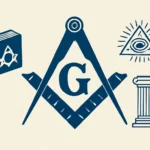
Symbols associated with the Law God help communities visualize abstract ideas about justice, authority, and legitimacy. Visual motifs recur across cultures, even when the underlying theology differs.
Iconic Motifs and their meanings
Scales — balance, proportionality, and impartial weighing of evidence.
Sword — enforcement, deterrence, and the ultimate consequence of judgment.
Feather of Ma’at — truth, order, and cosmic judgment in the afterlife.
Gavel — the procedural mechanism of decision-making and the cadence of courtroom authority.
Blindfold (Justitia) — impartiality, ruling without prejudice, and the ideal of equal treatment.
Book or Codex — written law, codification, and the authority of statutes inscribed for governance.
These images travel across time and space, shaping legal iconography in courts, literature, and popular culture. They also reveal a tension between divine or moral authority and practical governance: a reminder that law is as much about the living practices of adjudication and compliance as it is about metaphysical claims of truth.
The Law God and Ethical Systems
The Law God archetype intersects with major ethical theories in profound ways. It raises questions about whether law is grounded in transcendent morality, in human reason, or in social agreement. Below are key themes that illuminate this intersection.
In the divine command perspective, law derives its authority from a higher, often transcendent source. Actions are right because they are commanded by the deity or by the cosmic order that the deity represents. Critics of this view worry that it makes morality dependent on arbitrary decrees, while supporters argue that divine commands articulate universal duties that humans, limited by circumstance, might not independently recognize.
In contrast, the natural law tradition maintains that there are discernible, rationally knowable principles of justice and human flourishing embedded in the natural order. The Law God in this frame is a symbol of universal truths discoverable through reason, observation, and reflection on human nature. This approach often harmonizes with civic ideals that aim to justify laws on grounds of human well-being rather than revelation alone.
Legal positivism and the secular state
Legal positivism asks: What makes a law valid? Is it the moral content, or is validity a matter of social facts—the existence of a recognized authority and the proper procedure? In this view, the Law God becomes a rhetorical device—a powerful story about why rules exist and deserve obedience, independent of their moral valence. Critics argue that relying on divine or mythic authority can obscure abuses of power, while proponents contend that myths and symbols can reinforce social cohesion when carefully separated from coercive power.
Social contract and the legitimacy of law
The social contract tradition reframes the Law God archetype as a collective invention: communities agree to be governed in exchange for protection, security, and shared justice. The mythic language of a higher law or divine sanction can serve as a vehicle for expressing obligations that arise from mutual consent rather than unilateral decree. This perspective foregrounds accountability, transparency, and deliberation as essential elements of legitimate rule.
Legal Implications in Contemporary Thought
How do myths about the Law God shape contemporary legal theory and practice? The following sections explore practical implications in courts, constitutional law, and public discourse.
Constitutionalism and the rhetoric of divine legitimacy
In some jurisdictions, arguments invoking a transcendent or natural law basis for constitutional rights surface in political rhetoric or jurisprudence. While modern democracies typically separate church and state, the enduring appeal of a higher law helps justify protections for liberty, equality, and due process. Courts may reference the moral intuitions that myths of the Law God encode—truth, fairness, dignity—without endorsing religion in the law. This balancing act seeks to preserve pluralism while acknowledging the deep human need for authority that is more than merely procedural.
Judicial interpretation and symbol use
Judges and lawyers routinely deploy symbolic language of the Law God to frame arguments. A speaker might describe a ruling as upholding divine order or protecting the cosmic balance of rights and duties. While such rhetoric can inspire civic virtue, it also risks overreach if it obscures legal reasoning with appeals to authority that cannot be scrutinized or debated. A healthy legal culture uses these symbols as heuristics—normative roadmaps—while insisting on transparent methods, open records, and reasoned justification for decisions.
Ethical accountability and reform
Mythic language about divine justice can power reform movements when it clarifies what should be protected from tyranny or neglect. Yet it can also be weaponized to justify dogma or suppress dissent. The contemporary challenge is to translate the aspirational aspects of the Law God into concrete safeguards: independent oversight, rights-based legislation, proportional enforcement, and opportunities for redress. A mature approach treats the mythic dimension as a moral resource rather than an instrument of coercion.
Literary and Pop Culture Interpretations
From novels to games to cinema, the Law God remains a compelling device for storytelling. Creators use this archetype to probe justice, power, and responsibility in imaginative ways. Here are some representative threads and tropes.
Fantasy and mythic justice
In fantasy literature and role-playing narratives, the Law God often emerges as an elder arbiter who adjudicates disputes among diverse beings. A common plot involves a quest to restore balance after a tyrant manipulates sacred law to expand control. The moral core of these stories usually centers on the tension between divine mandate and human fallibility, asking readers and players to consider when obedience to law becomes a form of moral compromise and when resistance to unjust law becomes a moral duty.
Graphic novels and cinema
In graphic novels and films, the imagery of Justitia or Themis appears in frames that contrast light and shadow, law and chaos. The Law God in these works is often a controversial figure—one who might be revered as a savior of order or condemned as a tool of oppression, depending on who wields the scales. Such depictions invite audiences to scrutinize the source of authority and to imagine a more just legal order where power is checked by accountability and empathy.
Modern media sometimes treats the Law God with skepticism or playful inversion. Guises like the “Gavel-God” or satirical depictions of a divine judge in courtroom settings illuminate how people wrestle with the paradoxes of law: that rules can be perfect in theory yet flawed in practice; that justice is often a negotiation among competing human interests; and that myths around law can either uplift civic ideals or justify exclusion.
Philosophical Debates
At its core, the study of the Law God touches enduring philosophical questions about what law is, why it should be obeyed, and how it ought to be administered. Several debates shape this landscape.
Is law a product of divine will, or a human-constructed framework?
This question divides ethical theory and legal philosophy into two broad camps: those who see law as ultimately grounded in a transcendent order, and those who view law as a human construct shaped by culture, practice, and consensus. The Law God provides a useful mirror for analyzing these positions, because it embodies the intuition that law carries weight beyond mere social convention, yet must still be interpreted, implemented, and revised by people who are inherently fallible.
Impartiality, bias, and the limits of symbol
The symbolism of the Law God—scales, blindfolds, and seals—raises important cautions. Symbols can promote fairness, but they can also obscure bias. The ideal of impartiality must be complemented by attention to law’s material effects: who benefits or suffers under certain rules, how institutions are structured, and which voices are validated or marginalized in the process of adjudication.
Justice, mercy, and the scope of mercy
A mature account of the Law God recognizes that justice and mercy are not always perfectly aligned. The mythic impulse toward uncompromising order can sometimes neglect compassion, while the impulse toward radical mercy can undermine public safety or predictability. Philosophers and jurists explore how to balance these tensions within legal systems, ensuring that mercy informs prudence, and prudence preserves humanity.
Practical Reflections: What the Law God Teaches Modern Society
Even as a mythic figure, the Law God offers practical guidance for contemporary governance and civic life. The following reflections distill lessons from the archetype that are applicable today.
Legitimacy matters: Law gains authority when it emerges from a credible, accountable process and demonstrably serves the common good.
Balance is essential: The scales symbolize more than procedure; they remind us to weigh competing interests fairly and proportionally.
Transparency strengthens faith in law: Clear reasoning, accessible records, and open debate help people trust rules that govern them.
Rights require responsibilities: The Law God’s call for order must be paired with protections for autonomy, dignity, and due process.
Myth can motivate reform: Archetypes can inspire ethical ambition, but they should be harnessed to improve practice, not to justify coercion.
Conclusion: The Enduring Power of the Law God Archetype
From ancient scales to modern constitutions, the Law God archetype endures because it speaks to a shared human longing: to live within a framework that is just, stable, and worthy of trust. Mythic figures who embody divine law, whether named as Themis, Ma’at, Forseti, or the unnamed Lawgiver, remind us that law is a moral project as much as a social contract. They prompt questions about authority, accountability, and the limits of human judgment. They invite us to imagine legal systems where authority is exercised with wisdom, restraint, and reverence for the dignity of every person. And they challenge us to translate these high ideals into concrete institutions, practices, and reforms that can sustain justice in the messy realities of contemporary life.
In this comprehensive guide, we have traversed myth, power, and legal implications to offer a nuanced portrait of the Law God as an idea that informs, enlivens, and critiques the law as it exists and as it could become. Whether you encounter this archetype in ancient temples, in the pages of epic fiction, or in the courtrooms of today, its enduring question remains the same: how can the authority we invest in law reflect a higher standard of truth, fairness, and humanity?