Christian Songs on Piano for Beginners: Easy Worship Piano Tutorials is a practical guide designed to help new players build confidence, learn core worship tunes, and develop essential piano skills through simple, beginner-friendly arrangements. Whether you are teaching yourself at home, guiding a youth group, or accompanying a small church service, this article offers clear steps, practical tips, and a variety of song options to expand your repertoire. The focus is on accessible keys, straightforward rhythms, and left-hand patterns that reinforce rhythm without overwhelming you. Below you’ll find a structured path from setup and fundamentals to hands-on tutorials and practice strategies, plus a selection of favorite songs that are ideal for beginners and that work well in worship settings.
Getting started with Christian songs on piano for beginners
Starting with core fundamentals sets you up for sustainable progress. For most beginners, the piano keys in C major (no sharps or flats) are the friendliest place to begin. This allows you to focus on rhythm, finger placement, and reading simple melodies without worrying about accidentals. As you gain confidence, you can gradually move to keys like G major or F major, introducing a few sharps or flats as needed.
Posture and hand position: Sit with a tall back, relaxed shoulders, and arched fingers. Your thumb should rest on middle C when you start.
Finger numbers: Use 1 for thumb, 2 for index, 3 for middle, 4 for ring, and 5 for pinky. Consistent fingering will help you switch chords smoothly.
Right-hand melody vs. left-hand accompaniment: For beginners, practice the right-hand melody separately first, then add the left-hand accompaniment once the melody is comfortable.
Rhythm and metronome: Start with a slow tempo and use a metronome to lock in consistent timing. Increase tempo gradually as accuracy improves.
Chords you’ll encounter early on: In C major, common beginner chords include C, F, G, Am, and Em. These chords form the backbone of many easy worship tunes.
As you continue, keep in mind that consistency beats speed. It’s better to play slowly and accurately than to rush through a piece with mistakes. Aim for small, steady improvements each practice session, and you’ll find that progress compounds over weeks and months.
Essential tools and setup for learning worship piano
Having the right tools helps you stay motivated and focused. Here are some essentials that make easy worship piano tutorials more effective and enjoyable.
Keyboard or piano: A 61 or 88-key keyboard with full-size keys is ideal. If you’re just starting, a 61-key keyboard with a sustain pedal is sufficient.
Metronome or rhythm app: A dedicated metronome or a rhythm app helps you internalize tempo and timing across songs.
Sheet music or chord charts: Start with simplified chord charts for beginners. Over time, you can add melody lines to create fuller arrangements.
Practice journal: Record what you practiced, what went well, and what needs more attention. This helps you track growth and stay motivated.
Supportive learning environment: A quiet, comfortable space free from distractions can improve your focus during practice.
In addition to these tools, consider using beginner-friendly software or apps that offer interactive lessons, chord progressions, and a library of worship songs arranged for beginner piano. The goal is to make practice engaging and purposeful, not tedious.
Core concepts for beginner worship piano players
Understanding a few core concepts helps you interpret worship songs more accurately and play with confidence. Here are the essential ideas every beginner should know.
Chord-based accompaniment: Most beginner worship tunes rely on a handful of chords. You’ll often play the root note in the left hand while the right hand plays the melody or chords.
Rhythmic phrasing: Practice counting beats in 4/4 time and feel the strong beats (1 and 3) for a steady foundation. Syncopation is introduced gradually as you grow more confident.
Right-hand melodies: Start with the simplest melodic line that aligns with the chord changes. Keep the melody clear and legato (smooth).
Left-hand patterns: For beginners, typical patterns include:
Play the chord’s root on beat 1 and hold it (or play a simple arpeggio).
Alternate between root and fifth or use a broken chord pattern (arpeggios) for a fuller sound.
Keep left-hand motion slow and deliberate to avoid rushing the right hand.
Dynamics and expression: Use gentle dynamics to reflect worshipful mood. Gradually increase dynamics for a climactic moment, then soften to return to a contemplative feel.
With these concepts in mind, you’ll be prepared to approach specific songs with a structured plan, rather than simply trying to play by ear. A deliberate practice approach will yield better results and help you serve the church more effectively through music.
Easy worship piano tutorials: step-by-step approaches
In this section, you’ll find beginner-friendly tutorials for a few classic and contemporary Christian songs. Each tutorial includes a step-by-step plan, simplified chord progressions, suggested fingerings, and a brief practice routine. The goal is to give you a clear path to a playable, confident arrangement in a short amount of time.
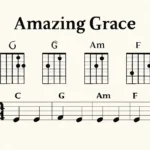
Amazing Grace (simplified in C major)
Overview: A timeless hymn that is ideal for beginners because of its predictable 4/4 meter and straightforward melody. The simplified version in C major uses only a handful of chords (C, F, G, Am).
Chords and arrangement: Right hand plays a simplified melody in the key of C major. Left hand provides a steady C–G–F–C pattern, or a simple root-note rhythm on beats 1 and 3.
Suggested fingering: Right hand: 1-3-2-3-4-5 for the melody notes; Left hand: 5-3-2-1 (root notes C-G-D-F as needed).
Practice plan:
Practice the left-hand pattern alone at a slow tempo.
Practice the right-hand melody separately until smooth.
Combine hands at a comfortable tempo (around 60-70 BPM).
Repeat five minutes daily, gradually increasing tempo to 80-90 BPM.
Overview: A short, melodic hymn that fits well for early worship sessions. The beginner arrangement stays in C major with simple chords and a clear, singable melody.
Chords: C – G – Am – F – C – G – C (with occasional Em as a passing chord).
Left-hand approach: Alternate between C and G in the bass on beats 1 and 3, while playing a light accompaniment on the other beats.
Right-hand approach: Play the melody using a simple fingering pattern (1-2-3-4-5). Keep it light and even.
Practice plan:
Learn the chords in the left hand first, then the melody in the right.
Put hands together at a slow tempo, focusing on smooth transitions between chords.
Sing the lyrics while playing to improve phrasing and breath control.
How Great Thou Art (easy arrangement)
Overview: A beloved hymn with a powerful message, often performed in larger worship settings. The beginner-friendly version uses a simple right-hand melody and a repetitive left-hand pattern in the key of C major or G major.
Chords: C – G – Am – F – C – G – C (simplified version may substitute Em for a smoother transition).
Left-hand pattern: Long holds on the root notes with occasional octave embellishments as you improve.
Right-hand melody: Focus on clear melody notes that align with the chord changes. Avoid rushing the high notes.
Practice plan:
Practice the verse in small sections, one phrase at a time.
Combine with a steady left-hand pattern and a metronome set to a moderate tempo (60-70 BPM).
Gradually introduce dynamics to emphasize the climactic lines.
In Christ Alone (beginner-friendly arrangement)
Overview: A modern worship staple that can be adapted for beginners by simplifying the accompaniment and keeping to a limited range of chords. The key of C major or G major is often preferred for ease of left-hand movement.
Chords: C – G – Am – F – Em – F – C – G – C.
Left-hand pattern: Root-note accompaniment on beats 1 and 3 with a light arpeggio for some chords.
Right-hand melody: A straightforward melody line that follows the vocal line. Maintain legato phrasing for worshipful feel.
Practice plan:
Learn the chord progression first in block form.
Practice the melody separately, ensuring accurate pitch alignment to the chords.
Put hands together slowly, then increase speed as accuracy improves.
These step-by-step tutorials are designed to be approachable while still offering a sense of accomplishment. As you grow, you can add simple embellishments, such as gentle arpeggios or light dynamics, to deepen the musical experience without losing the beginner-friendly nature of the arrangements.
Practical practice routines for beginner worship pianists
A consistent routine is essential for building muscle memory and confidence. Here are practice routines tailored for beginner worship players. Each routine takes about 20-30 minutes and can be adjusted to your schedule.
Warm-up (5 minutes): Five-minute scale or simple arpeggio in C major. Focus on even tone and steady tempo. Include 2-3 finger independence exercises to loosen your hands.
Chord drills (5-7 minutes): Practice the common I–IV–V–vi chord progression (C–F–G–Am in C major). Use steady left-hand root notes and rhythmic right-hand block chords.
Melody practice (5-7 minutes): Choose the melody from one beginner song and practice hands separately. Sing along to help with phrasing.
Hands-together (5-10 minutes): Combine hands at a slow tempo. Use a metronome and count aloud, focusing on timing of changes between chords and melody notes.
Cool-down and reflection (2-3 minutes): Play a favorite, simplest hymn softly to end on a peaceful note and reflect on what you learned.
Progression tips:
Keep the pulse steady before increasing tempo. Don’t rush the changes.
When you encounter a difficult measure, loop it slowly until it becomes natural.
Record yourself occasionally to monitor rhythm, tone, and accuracy.
These routines help you develop muscle memory, rhythm, and musicality while staying aligned with the worship context. The goal is to make each session productive and spiritually meaningful at the same time.
Chords, left-hand patterns, and right-hand melodies: practical tips
For beginners, a few practical tips can make a big difference when playing Christian songs on piano for beginners.
Left-hand foundations: Start with root-note accompaniment. For a song in C major, play C on beat 1 and G on beat 3, then add in the fifth or octave once comfortable.
Right-hand clarity: Keep the melody line simple and expressive. Do not attempt to play every passing tone—focus on the core melody notes that define the tune.
Chord inversions for easier transitions: Use first inversions (when possible) to reduce hand movement between chords and maintain a smoother sound.
Tempo control: The tempo should support congregational singing. If in doubt, aim for a tempo where you can count the beat clearly and keep steady.
Dynamic shaping: Use soft dynamics during verses and a slightly fuller sound in verses or choruses that aim to build emotion.
By integrating these techniques, you’ll be able to sustain a clear and supportive musical foundation for worship. Remember, the aim is to facilitate accompaniment that encourages the congregation to sing, rather than to showcase technical virtuosity.
Variations and breadth: embracing varied Christian songs for beginners
To build a broad and adaptable repertoire, consider exploring variations of Christian songs on piano for beginners across hymns, gospel songs, and contemporary worship tunes. Here are several categories and example titles you can rotate through to keep practice engaging and spiritually meaningful.
Traditional hymns: Examples include Amazing Grace, How Great Thou Art, Great Is Thy Faithfulness, and Be Thou My Vision. These are often in public domain and work well in simplified arrangements.
Children’s and family songs: Simple tunes like Jesus Loves Me or This Little Light of Mine reinforce fundamentals and are encouraging for beginners.
Contemporary worship songs: Try approachable pieces like Bless the Lord (Don Moen-style), Our God, or other modern worship anthems that have straightforward chord progressions.
Praise choruses with repetitive structure: Songs with repetitive phrases are easier to memorize and sing along with.
As you grow, you can experiment with different keys, add light ornamentation, or create simplified arrangements that emphasize the congregation’s singing. The breadth of Christian songs on piano for beginners is a wonderful way to connect your technical practice with spiritual expression.
Resources and tools for learning beginner piano worship songs
There are many resources available to support easy worship piano tutorials for beginners. The following options can help you access sheet music, practice materials, and interactive learning experiences.
Beginner hymn books and chord charts: Look for collections that present worship songs in key-friendly versions (C major or G major) with left-hand patterns spelled out.
Online tutorials and video lessons: Short, focused videos can demonstrate fingerings, hand positions, and rhythm in a visual format that complements written materials.
Looped practice recordings: Recordings that loop a measure or phrase allow you to practice independently and at your own pace.
Mobile apps for piano practice: Apps offering simple chord progressions, metronome, and practice tracks can be extremely helpful for beginners.
Sheet music apps and digital libraries: Access simplified arrangements of well-known hymns for instant practice and learning flexibility.
Integrating these resources into your routine can accelerate progress and help maintain motivation. Remember to choose materials that match your current skill level and gradually increase difficulty as you master each piece.
Encouragement, goal setting, and spiritual dimension
Learning Christian songs on piano for beginners is not only about technique; it’s also about service and spiritual growth. Regular practice can become a meaningful part of your worship life, helping you lead or participate more confidently in church services, youth groups, or family gatherings.
Set achievable goals: Aim for a song or two each month rather than trying to learn many pieces at once. Small, consistent milestones lead to steady progress.
Practice with purpose: Each routine should align with your worship goals—whether it’s supporting congregational singing, accompanying a soloist, or simply offering a moment of reflection through instrumental music.
Be patient with yourself: Progress in piano is a journey. Expect plateaus and celebrate improvements, no matter how small.
Invite spiritual practice into practice: Use your time at the piano as a moment of prayer or reflection, focusing on connecting with God through music.
With dedication and a clear sense of purpose, your beginner piano worship journey can become a source of joy for you and those you serve. The hymns and worship tunes you learn today can bless future worship gatherings for years to come.
Conclusion: building a sustainable path for Christian piano beginners
Starting with beginner-friendly worship piano arrangements provides a solid foundation for long-term growth. By focusing on simple keys, steady rhythms, and practical left-hand patterns, you can quickly achieve playable results that are both musically satisfying and spiritually meaningful. The combination of structured practice, approachable songs, and spiritual intent forms a powerful approach to Christian songs on piano for beginners.
To recap, here are the core steps for a successful beginner journey:
Begin in C major to simplify chords and melody.
Learn a handful of core chords (C, F, G, Am, Em) and practice root-note left-hand patterns.
Choose a few beginner songs—hymns and contemporary worship tunes—that you enjoy and that offer clear, repetitive structures.
Follow a consistent practice routine that includes warm-up, technique work, melody study, hands-together practice, and reflection.
Gradually introduce more advanced concepts at a comfortable pace, such as inversions, arpeggios, and dynamic shaping.
As you embark on this journey, remember that every note you play can contribute to a meaningful moment of worship. May your piano practice bring you closer to God and enable you to share your gift with others in song.